Temporary Works in Basement Excavation
Temporary Works in Basement Excavation
Basement excavation is one of the most risk-sensitive stages of underground construction, particularly on high-value residential sites across the Cheshire Golden Triangle, South Manchester, North Leeds and the Newcastle suburbs. Managing that risk requires more than experience alone — it demands a structured, compliant approach to temporary works. This article explains BS 5975-1:2024 temporary works, setting out how Temporary Works Coordinators (TWC) and Temporary Works Supervisors (TWS) should operate, why safe sequencing and design checks matter, and how properly managed temporary works underpin safe, controlled basement excavation.
Basement excavation is one of the most safety-critical and technically complex stages of below-ground construction. Across the Cheshire Golden Triangle, South Manchester, North Leeds and the Newcastle suburbs, projects often involve constrained access, sensitive boundaries, and adjacent structures that demand rigorous control.
BS 5975-1:2024 temporary works sets out how temporary works must be managed: with defined roles, documented temporary works procedures, appropriate design checks, and clear governance over safe sequencing. It’s not about “best effort”—it’s about demonstrable competence, accountability, and risk control.
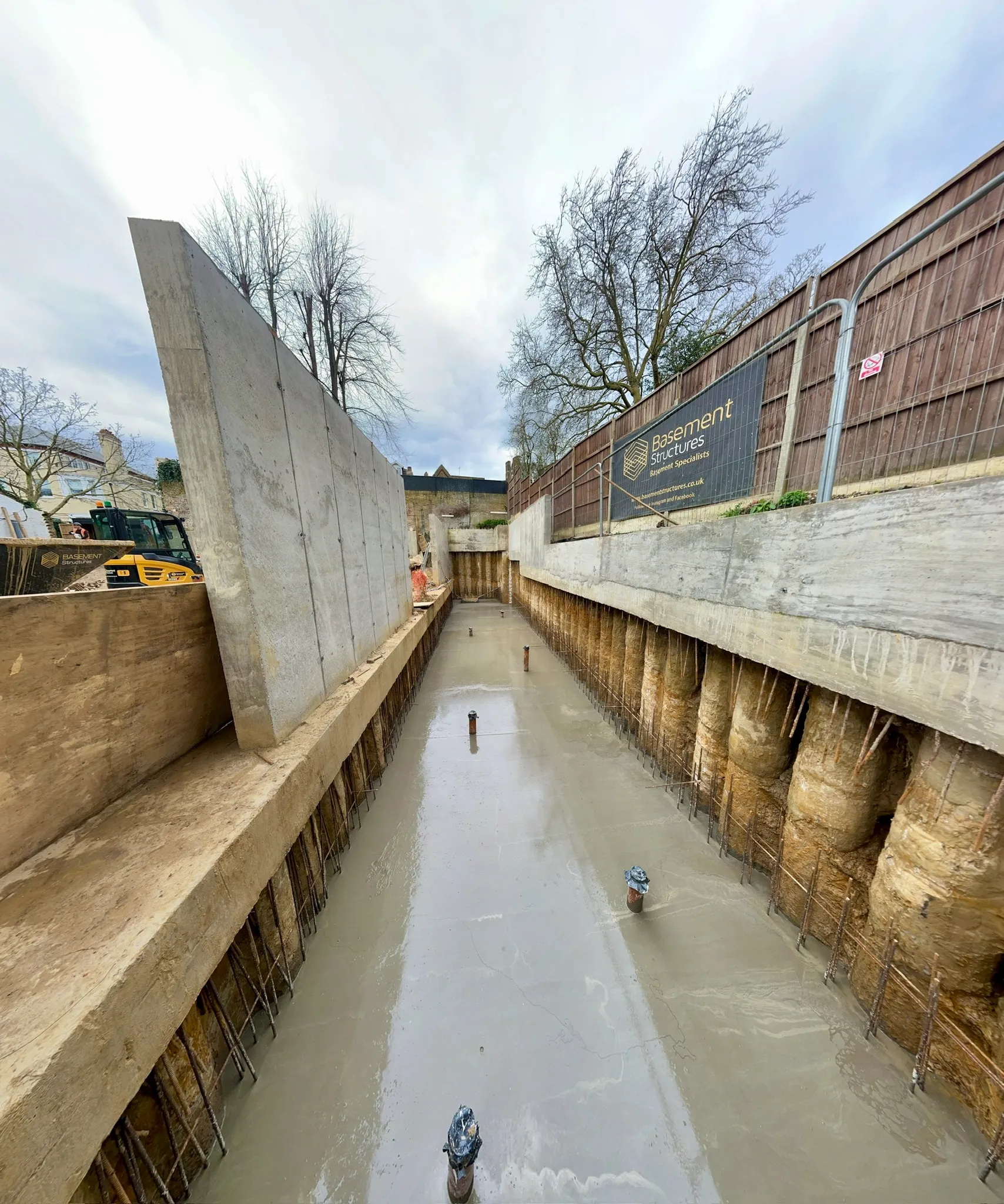
For basement projects, temporary works typically include engineered systems that keep excavation stable until the permanent structure is self-supporting. This is why basement excavation temporary works must be integrated with structural planning and delivery—particularly during structural excavation and enabling works.
Basement Structures North can provide these services entirely in-house—including a competent temporary works coordinator and temporary works supervisor—so temporary works management remains aligned with the wider programme, neighbour considerations, and CDM duties. Where risk and governance require it, independent checking is incorporated to maintain robust control.
BS 5975-1:2024 Temporary Works—Key Requirements for High-Risk Basement Sites
| Control Area | Why It Matters in Basement Excavation | What “Done Properly” Looks Like |
|---|---|---|
| Temporary Works Procedures | Controls how designs are raised, checked, issued and changed. | Documented procedures, a live register, and clear hold points. |
| TWC / TWS Roles | Creates accountability for coordination and site implementation. | Competent appointment, defined responsibilities, and site oversight. |
| Safe Sequencing | Sequencing errors can lead to movement, cracking, or instability. | Approved methodology aligned with structure and monitored on site. |
| Design Checks | Reduces the likelihood of design error and unmanaged assumptions. | Checks proportionate to risk, including independent review where required. |
| Neighbour / Boundary Risk | Basements often sit close to party walls and sensitive boundaries. | Integrated planning with logistics & neighbour management. |
Temporary works governance also sits alongside statutory duties under CDM 2015. Our approach integrates temporary works with health & safety (CDM), project controls, and site-specific risk management from day one.
Temporary Works in Basement Excavation—FAQs
BS 5975-1:2024 temporary works is the British Standard that sets out procedural requirements for managing temporary works safely. It emphasises competence, duty-holder appointments, design checks, supervision and change control— all essential on high-risk activities such as basement excavation.
In most basement projects, yes. Excavation creates instability until permanent works are in place, so engineered basement excavation temporary works are used to support ground and protect adjacent structures, boundaries and access routes—particularly in dense residential areas.
A temporary works coordinator manages the temporary works process, including the register, design briefing, coordination of design checks, approval control, and management of change. This governance is central to compliance and risk control under BS 5975-1:2024.
A temporary works supervisor supports day-to-day implementation by monitoring installation and use on site, helping ensure approved procedures and sequencing are followed, and escalating issues to the TWC. This reduces the risk of unauthorised changes and unsafe conditions during excavation.
Yes—provided competence and procedures are in place. Basement Structures North can deliver temporary works services entirely in-house, including TWC/TWS roles and integrated planning, while incorporating independent design checks where required by risk level and project governance.
Planning a Basement Excavation in Cheshire, Manchester, Leeds or Newcastle?
For high-value residential sites, compliant temporary works management is a foundation of safe delivery. Our engineering-led team can manage BS 5975-1:2024 temporary works end-to-end—integrated with design & build basements, surveys & investigations, and project management & client care. This article is for general information only; all projects require site-specific design and competent oversight.
Speak to a Basement Temporary Works Specialist